
The Rise and Fall of San Diego Hospice — Part 1

How a “Mother Ship” Was Built: Ethos, Scale, and Blind Spots
I trained at San Diego Hospice. In fact I was part of the last class of fellows.
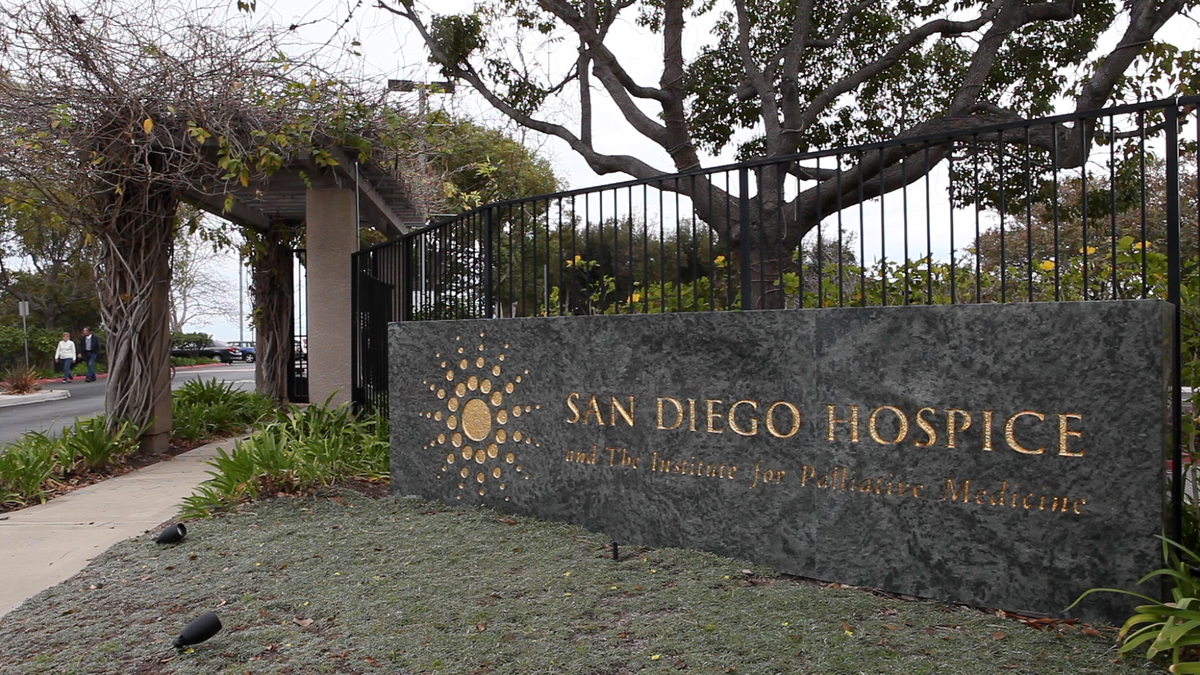
That sentence carries weight I've been unpacking ever since. SDH shaped how I think about dying, how I talk to families in crisis, and what I believe palliative care owes the communities it serves. The people who trained me there were among the best in the world at what they did. The campus on the Hillcrest bluff—overlooking Mission Valley, purpose-built for the work of accompanying people through death—was not just a facility. It was a declaration that this work deserved a permanent, beautiful, serious home.
And then it was gone. Bankruptcy. Closure. Patients transferred mid-crisis. Staff scattered. A 40-year institution dismantled in a few months. The national leader of the hospice movement at the time called SDH "the mother ship." He was right. And the mother ship sank not because of an iceberg no one saw coming, but because of structural risks.
This is Part 1 of a four-part series reconstructing what happened and why it matters. Not as eulogy. Not as prosecution. As a case study in what leaders of mission-driven organizations owe the people they serve—including the uncomfortable obligation to stress-test the institution's own mythology against the regulatory and financial realities it actually operates within.
What Made SDH Singular
At its peak, San Diego Hospice cared for roughly 1,000 patients per day—a census few hospices have ever approached, and none with SDH's breadth of services. It operated across home, facility, and inpatient settings simultaneously. The 24-bed Inpatient Care Center on the Hillcrest bluff, built with an $18 million gift from Joan Kroc in 1988, functioned as a regional safety valve for refractory symptoms that overwhelmed the capacity of homes and nursing facilities. Contemporary trade reporting called it the only facility of its kind in California. It was, in the most literal sense, irreplaceable.
Scale alone didn't make SDH formative. Three things did.
First, clinical presence at depth. SDH embedded palliative practice across every care setting in the region. The model wasn't referral-and-handoff; it was sustained, expert presence wherever the patient was. Steadiness was the point: keep people comfortable and oriented while the rest of the system pulled in a dozen competing directions.
Second, education as infrastructure. The Institute for Palliative Medicine, housed on the SDH campus, trained global cohorts of physicians, nurses, social workers, and chaplains who left with a professional identity anchored in symptom control and communication. Founded by Dr. Doris Howell, the institution didn't just train clinicians—it produced the people who would go on to build hospice and palliative care programs across the country. That pipeline was visible, deliberate, and deeply tied to the physical campus.
Third, community trust built on philanthropy and civic identity. SDH's reputation in San Diego wasn't merely clinical; it was civic. Joan Kroc's name on the building. Doris Howell's legacy woven into the institution's identity. Memorial walks on the campus grounds where families returned year after year. Hospice as community obligation, not just healthcare service. That kind of trust takes decades to earn. It can evaporate in weeks.
What the Culture Underweighted
The same culture that built those three pillars consistently underweighted three realities that would prove fatal.
Regulatory scrutiny of long length-of-stay was not new, and SDH knew it firsthand. In 1997, the Office of Inspector General examined SDH under Operation Restore Trust, a federal initiative targeting Medicare vulnerabilities in five states. OIG reviewers focused on beneficiaries enrolled beyond 210 days and found improper payments totaling $2.1 million for 37 patients deemed ineligible, plus an additional $1.35 million across 19 cases where documentation was insufficient to determine terminal status. SDH's founding medical director later said she successfully appealed those findings.
That appeal may have been the most consequential institutional decision SDH ever made—not because it was wrong, but because of what it taught the organization about itself. If you fight the federal government on eligibility and win, the lesson you internalize is: our clinical judgment is sound, and we can navigate the enforcement apparatus. It's a reasonable conclusion from a single data point. It's a dangerous one to carry forward for 15 years without retesting it against a changing regulatory landscape.
Payment design creates incentives you must actively neutralize, not passively assume away. MedPAC had been pressing this point since at least 2009: the flat per-diem hospice payment doesn't match the U-shaped cost curve of actual care delivery. Costs are highest at the beginning and end of an episode, lowest in the middle. A flat daily rate means long stays are structurally more profitable, because the low-cost middle stretches. By 2012, MedPAC data showed average hospice length of stay had risen from 54 days to 88 days nationally, driven largely by increases in very long stays. For-profit hospices had longer stays than nonprofits across every diagnosis category.
SDH was a nonprofit with a genuine clinical mission. None of this means SDH was gaming the system. It does mean that any large hospice with a high proportion of long-LOS patients is sitting in a risk posture that requires active, ongoing, board-level compliance work—regardless of how pure the clinical intent.
OIG kept hospice on the work plan, in public, with increasing specificity. The FY2012 and FY2013 OIG Work Plans targeted hospice marketing practices and financial relationships with nursing facilities, general inpatient care claims, and coverage criteria. A prior OIG report had found that 82% of hospice claims for patients in nursing facilities did not meet Medicare coverage requirements. These weren't surprise inspections. They were published enforcement roadmaps, available to any compliance officer or board member who chose to read them.
The Policy Trail Was Long
It's tempting to frame what happened to SDH as a story that only makes sense in hindsight. It isn't. Avoiding what came next required discipline, not clairvoyance.
The timeline tells a different story than inevitability. In 1997, OIG audited SDH specifically for long-stay eligibility under Operation Restore Trust—one of only a handful of hospices examined nationally. SDH's leadership fought the findings and, by their account, prevailed. By 2011, hospice had grown into a program serving approximately well north of a million Medicare beneficiaries annually, with expenditures exceeding $13 billion and climbing. Between 2012 and 2013, OIG announced specific hospice enforcement priorities. MedPAC continued pressing for payment reform because the existing structure made long stays disproportionately profitable.
When you operate at SDH's scale—1,000 patients a day, deep community trust, a national reputation—those aren't footnotes in a policy journal. They are board homework. They are compliance infrastructure that should have been operationalized years before an auditor pulled the first file.
The known-unknowns were foreseeable. By 2011–2012, federal auditors had taken SDH records and stopped providing feedback. Leadership would later say that Medicare "won't talk to us." That's a brutal operating condition. It's also not an unforeseeable one for a large hospice with long-LOS exposure and a prior enforcement history. When you have policy precedent from 1997, a successful appeal that may have bred institutional overconfidence, and national coverage describing intensified scrutiny—you should expect prolonged regulatory silence. And you should plan for it.
Where I Might Be Wrong
This is an analysis built partly on public records, partly on reported investigations, and partly on policy history that I'm connecting to institutional decisions I didn't witness from the inside. A few caveats worth naming:
- SDH's internal compliance infrastructure may have been more robust than the public record suggests. The absence of evidence in reported accounts is not evidence of absence.
- The 1997 appeal's effect on institutional culture is my inference. It's grounded in how organizations typically process regulatory encounters, but I don't know what SDH leadership actually concluded from it.
- Regulatory silence—Medicare refusing to communicate during an active audit—imposes real constraints on planning that are easy to underestimate from the outside.
- The people who led SDH during this period were, by every account, clinically committed. Structural critique is not a character indictment.
If new information surfaces that changes the picture, I'll say so.
Why the Rise Matters for the Fall
It would be easier to start this series with the crisis: the front-page disclosure, the census freefall, the payroll cliff, the bankruptcy. That's where the drama lives. But starting there lets you believe the ending was inevitable—that once the audit began, SDH was already dead.
It wasn't. The rise shows that SDH had human capital, institutional capital, community standing, and physical infrastructure that could have absorbed the shock. What it lacked was a culture that converted known policy risk into operational practice before the crisis arrived.
Community trust could have stabilized referrers and donors—if paired with a credible, transparent, range-based plan rather than a sudden, unscaffolded public disclosure. The campus and inpatient unit could have bought time for documentation remediation—if kept open under predefined triggers rather than shuttered without transition protocols. Scripps's eventual involvement could have been positioned as runway for recovery rather than a glide path to liquidation—if leadership had tied bridge funding to milestones.
These weren't options that required extraordinary foresight. They were standard crisis-readiness moves for any large provider with mission-critical exposure to federal payment rules. They were available. They weren't used.
I trained at San Diego Hospice. I learned how to say yes to difficult things there—how to push the bounds of what hospice care could be, how to sit with suffering and not flinch. What I didn't learn there, and what I think the institution itself never fully learned, is that clinical excellence and administrative fragility can coexist in the same building for years without anyone noticing until the floor gives way.
That Hillcrest bluff—Joan Kroc's $18 million declaration that dying people deserved a serious, beautiful, permanent space—is an apartment complex now. The memorials were taken down and put in storage. Whatever you think about the decisions that led to that outcome, sit with that image for a moment before moving on.
Understanding how it happened is the only thing that prevents it from happening again. Not to preserve nostalgia. To make sure the next mother ship is built on a foundation that includes the unglamorous, uncomfortable, politically thankless work of compliance infrastructure and risk governance alongside the clinical brilliance.
Next: Part 2 reconstructs the pivotal window from Fall 2012 through February 2013—the public disclosure, the census freefall, the inpatient closure, and the Scripps advance. We'll separate what leaders knew from what they didn't, and examine why the sequence of decisions, not just their substance, proved fatal.
I am a palliative care physician, educator, and professional strategery expert known for turning rounds into rants and rants into teaching points.


