
The Rise and Fall of San Diego Hospice — Part 4
When San Diego Hospice closed, 401 patients were still in its care. Where they went is not in the public record.

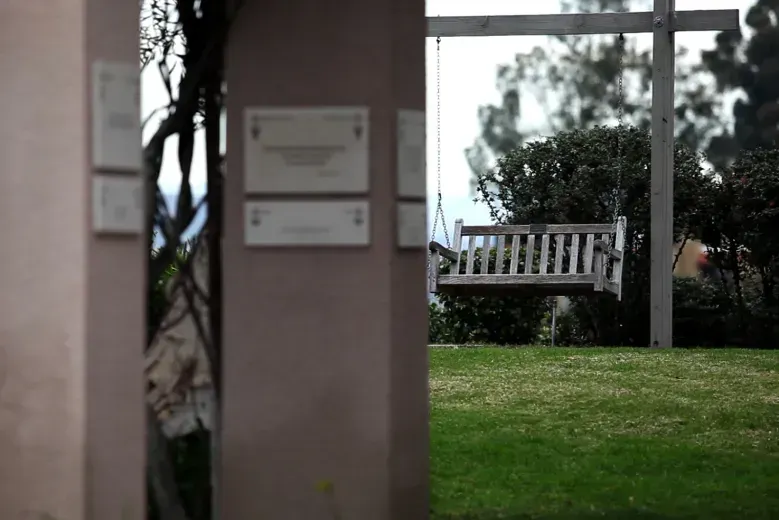
Lifeboats: Four hundred patients and no plan
Part 4 of a four-part series. Part 1 examined how San Diego Hospice was built and what its leadership chose not to see. Part 2 reconstructed the decisions between November 2012 and February 2013. Part 3 separated the $112 million claim from the $10 million audit. This part follows the patients.
Medicare revoked the enrollment of 149 hospices in 2025, and imposed the maximum ten-year re-enrollment bar on three quarters of them. In April, CMS announced that more than 200 hospices in the first states subject to its enhanced oversight program had lost enrollment. Payment suspensions have swept California on a scale the benefit has not seen, and providers caught in them are reporting closures.
The field is arguing about whether that enforcement is proportionate, and the argument is worth having. Underneath it sits a question nobody is asking. Every closure moves dying people from one organization to another, and no rule in the Medicare program assigns anyone responsibility for how that goes. San Diego Hospice ran that experiment thirteen years ago with 401 people in its care, and the result was never recorded — not by the hospice, not by CMS, not by the field.
Who Was Still in the Building
On February 25, 2013 — three weeks after the bankruptcy filing, twelve days after the announcement that the organization would close — San Diego Hospice's chief operating officer filed a declaration with the court. He told the judge the organization needed $2 million immediately or it would miss the March 8 payroll. He listed what it could no longer buy: oxygen tents, catheters, bedpans. And he named the figure that matters most in this series.
Four hundred and one patients were still in care.
They were what remained of a census that peaked near 1,000 and fell to roughly 600 within weeks of the November disclosure. About a hundred of that decline came from patients discharged alive after review found they no longer met the six-month prognosis standard — the organization's own figure, given to reporters in January. The rest came from referrals that stopped and admissions it declined to make. My recollection of the admissions closure, which I have not found in any contemporaneous account, is that it arrived on the Friday of a three-day weekend, and that the discharge planners I dealt with the following Tuesday had no plan for the patients they had been about to send.
The plan filed with the court had Scripps Health taking patients and hiring staff, and Scripps eventually hired 74 former San Diego Hospice employees. Where the patients went, the public record does not say. Contemporaneous accounts describe them dispersing across the county, and the organization said in mid-February that many of its former patients were already in the care of eighteen other hospices. That statement described the people shed during the contraction. What happened to the ones still enrolled when the doors closed went unwritten.
Set the 74 against a third figure. The related foundation's federal filing for that fiscal year reports that nearly 950 hospice employees were terminated during downsizing and bankruptcy, and that many later filed claims in the case for unpaid separation pay. The chart transferred, sometimes. The people who knew which daughter to call, which regimen had already failed, and what the patient was actually frightened of mostly did not.
The inpatient unit had closed weeks earlier. Twenty-four beds, built with an $18 million gift from Joan Kroc, described in contemporary trade reporting as the only facility of its kind in California. It was where the county sent delirium that would not settle and dyspnea that would not respond. It went dark first, while the community taking on the discharges was least equipped to manage a crisis at home.
I discharged the last patient from that unit back to their home with hospice, alive.
What Breaks, and Why
A hospice transfer fails in four predictable places, and each one is a scheduling problem before it becomes a clinical one.
Medications go first. A long-stay patient on a stable high-dose regimen — long-acting opioid, breakthrough dosing, adjuvants, a bowel regimen that took six weeks to get right — depends on a pharmacy relationship the closing hospice held. When that relationship ends before the receiving hospice's authorizations begin, the gap is measured in days and the consequence is measured in pain. Families do not wait out a pain gap. They call 911.
Prescriber reachability goes next, and it goes quietly. Every hospice publishes an after-hours number. The question is whether the person answering it can write an order. During a wind-down, staff leave on a schedule set by payroll rather than by census, and the number that reached a nurse practitioner in January reaches an answering service in March. A family cannot tell the difference until 2 a.m.
Equipment moves on vendor schedules built for orderly transitions. Oxygen concentrators, hospital beds, suction. When retrieval precedes replacement by even a day, a patient who was managing at home is not.
Every hospice patient also sits inside a working understanding held by a team: what the family believes, who among them dissents, which sibling flies in and destabilizes the plan, what "comfortable" has come to mean in this particular house. That understanding is the articulation work I have written about elsewhere — real labor, unbilled, invisible in the chart. It does not transfer with a chart. The receiving team spends its first week rebuilding what was already known, and the first week after transfer is when the crises happen.
That rebuilding is not evenly costly. A family that spent months being believed by a team starts over with strangers. A family that spent those months working to be believed starts over further back than that.
None of these failure modes was anyone's assigned responsibility. That is not an oversight in the San Diego Hospice case. It is the design.
Every Duty Ran to the Estate
The wind-down was, in the narrow sense, well governed. The proceeding had rules and the rules were followed.
The debtor had duties to the estate. The unsecured creditors' committee had a statutory mandate under the Bankruptcy Code to maximize recovery. The court confirmed a liquidating plan on September 23, 2013, and a liquidating trustee took over the assets. Every one of those duties was real, enforceable, and owed to money.
The proceeding got contentious in the way such proceedings do. In March 2013 the creditors' committee sought an independent trustee and, in filings reported at the time by inewsource and KPBS, accused the debtor of encouraging its own patients to move to Scripps and thereby giving away the estate's value. The parties reached a truce, the motion was withdrawn, and the allegation was never adjudicated. What survives is the shape of the fight: to the parties with standing, patient transfers were an asset question. Scripps bought the electronic record license and the computers, which was the single best decision anyone made for continuity, and made it as a term of an asset purchase.
The related foundation was pulled in too. Its own filing reports demands from the hospice's creditors and from the liquidating trustee, on the grounds that the two organizations had maintained accounts against which pledges had been made.
Two figures from that filing describe the institution better than anything in the clinical record. Entering the collapse, the foundation's unrestricted net assets stood at negative $350,373. Its permanently restricted net assets stood at $13,399,695, and its endowment schedule reports that endowment as one hundred percent permanent — no board-designated reserve, nothing discretionary. It was also borrowing.
Decades of stewardship aimed at permanence produced exactly that: a perpetuity fully funded and nothing on hand. The board that built the endowment and the board with no reserve were the same board, across the same decades, and the mismatch never registered as a risk. The tightrope act worked for thirty years, which is what made the absence of a net invisible.
Part 2 described leadership navigating by dead reckoning — estimating position with no external fix. The governance record shows something more uncomfortable. Every instrument in the proceeding was calibrated and working. They were all pointed at the estate. Nobody in the room had standing to raise the patients.
Sixty Days, or Fifteen
The obvious objection is that bankruptcy law governs bankruptcies and health regulation governs care, and the clinical duty belonged to a different department. Now I'm the first to say that I'm whatever the furthest thing is from a bankruptcy attorney, but I find this interesting.
When a nursing home closes, 42 CFR 483.70 requires a named administrator — an individual, personally — to give sixty days' written notice to the state survey agency, the long-term care ombudsman, every resident, and every resident's representative. Admissions stop the day notice is filed. The notice must include a relocation plan approved by the state, with assurances that each resident goes to the most appropriate available setting given that resident's needs, choice, and best interests. CMS attached penalties to the administrator who fails to do it.
When a hospice ceases operations on its own, the requirement is fifteen days' notice to the public. Cessation of business is deemed a termination effective the day you stopped serving the community. There is no closure plan, no designated individual, no ombudsman, no per-patient standard, and nothing that outlasts the closure to record where anyone went.
The gap has narrowed since 2013, though not in the direction you would expect. Under the survey and enforcement rules that followed the Consolidated Appropriations Act of 2021, a hospice that CMS terminates must arrange safe and orderly transfer within thirty days, and payment continues thirty days past termination for patients already admitted. Those protections attach when the government pulls the plug. They do not attach when an organization closes itself. A hospice that fails badly enough to be terminated now owes its patients more than one that runs out of money and stops.
One more comparison, because it is the sharpest available. The California Attorney General's Registry of Charitable Trusts had standing over the disposition of San Diego Hospice's charitable assets, and the Hillcrest campus sale could not close until that office received the required notice. A state office existed to make sure the real estate went somewhere defensible. None existed for the people.
Live Discharge Is Not Evenly Distributed
If no rule assigns the duty and no rule measures the result, the next question is who pays for the absence. The literature on ordinary live discharge answers it.
Roughly fifteen percent of Medicare hospice enrollees are discharged alive before they die, and that baseline is not evenly distributed. Black hospice patients disenroll at 18.1 percent against 13.0 percent for white patients. The difference persists within the same hospice, after adjusting for organizational effects — it is not explained by which organizations serve whom. A 2024 analysis in JAMA Network Open followed more than 115,000 Medicare decedents and found that Black identity, short length of stay, and for-profit ownership each independently predicted a burdensome transition after live discharge, with roughly one in seven discharged patients hospitalized or readmitted to hospice within two days.
The mechanism is the per-diem, and it is the same mechanism I have argued structurally excludes expensive patients from the hospice benefit in the first place. Patients whose care costs more than the daily rate are harder to keep. Patients who stabilize become ineligible. Both pressures land hardest on people whose illness trajectories and support structures already sit furthest from what the benefit was designed around.
A closure applies live discharge to an entire census at once, under conditions worse than any of those studies measured. If a functioning hospice with intact staffing already produces racially patterned harm at discharge, a hospice dispersing its census across an unknown number of receiving organizations, having terminated nearly its entire workforce, will not produce less of it.
I cannot show you that it did. Nobody can, and that is the finding. No reporting requirement outlasts a closure. There is no post-closure outcome measure, no thirty-day tracking obligation, no requirement that anyone disaggregate by anything. We know the demographics of the people the current enforcement wave is displacing exactly as well as we know the demographics of the four hundred and one, which is to say not at all.
What I Expect to Hear
You are asking a bankrupt organization to spend money it does not have. Three of the five commitments cost nothing but sequencing. The medication bridge costs real money, and it is smaller than the emergency department use it prevents — a cost the receiving hospices and local hospitals pay, not the closing one. That externality is why a rule would work better than a norm.
The 2021 reforms already closed this. They closed it for terminated hospices. The current wave is producing voluntary closures, which the reforms did not touch.
San Diego Hospice and Scripps did move quickly, and it helped. It did. Scripps bought the record system explicitly to make information transfer possible, took patients under the court plan, hired the people it could, and bought the campus saying it intended to preserve inpatient hospice care. Those decisions were made in good faith and they reduced harm. They also came after the census had fallen by 60 percent, after the inpatient unit had gone dark, and after most of the staff were gone. Good decisions late still leave people exposed.
Where I Might Be Wrong
I have not read the bankruptcy docket (I'm reasonably intrepid but I will not buying PACER access). I am working from contemporaneous reporting and from the foundation's own federal filings, and there are things in the case file that would sharpen or embarrass parts of this account.
The foundation restated its figures substantially between filings, and neither year's financial statements were reviewed or audited by an independent accountant. I am reading numbers the organization itself revised, and I would not stake a paragraph on any single line item.
My account of the admissions closure and the last inpatient discharge is memory, thirteen years old, uncorroborated. I believe it. I cannot document it.
And the central claim about harm is mechanistic rather than measured. I am reasoning from what live discharge does under normal conditions to what it must do under catastrophic ones. That reasoning is sound and it is not evidence. The reason it is not evidence is the same reason the argument matters, which is a convenient position for me to occupy and worth your suspicion.
The Record Is Still Empty
Four hundred and one people were still in care when a chief operating officer told a bankruptcy judge that his organization could not buy bedpans. They went somewhere. Most died within weeks, which is what they had enrolled expecting.
I do not know how it went for them. Neither does CMS or the field that trained me. Nobody was required to find out, so nobody did — and I could not reconstruct it thirteen years later from every account that exists.
One hundred forty-nine hospices lost their Medicare enrollment last year.
I am a palliative care physician, educator, and professional strategery expert known for turning rounds into rants and rants into teaching points.


