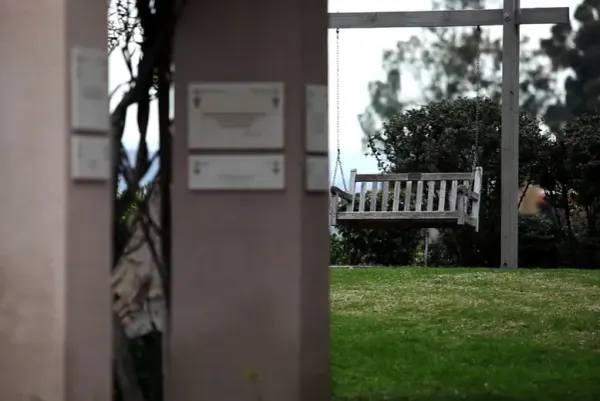
The Rise and Fall of San Diego Hospice — Part 4
When San Diego Hospice closed, 401 patients were still in its care. Where they went is not in the public record.
When San Diego Hospice closed, 401 patients were still in its care. Where they went is not in the public record.

Our predecessors arrived with lancets, basins, and calomel, and families opened the door anyway. Two documents published this August argue about what physicians are for without ever asking why.

Operations research has a name for what a palliative care consult does to a system failure. The name explains why the failure keeps happening.

There's a word for the part of our job nobody can see. Sociologists have had it since the 1980s. We were never trained in the discipline that keeps it.

Three trials tested whether the conversation is the intervention. Two came back null and one looked inside the machine. None of them supports the sentence — or our answer to it.

What Specialist Palliative Care has is concentration and repetition—we are in these rooms constantly, so we have gotten fast at reading which belief has seized and where the opening is. Scarcity does a great deal of the work in making that look like something only we possess.

The asking is the easy part. It's the move that lets you leave the room with clean hands, a documented preference, and a man who will get chest compressions he never wanted.

There are two options that are good for you. Both are disagreeable. My job is not to invent a third or to make you pronounce the medical conclusion so I don't have to be the one who said it. My job is to tell you why the boundary exists, in language you can argue with.

The delivery models our best researchers are building don't use the binary. They use tiers, triggers, defaults, dose-response logic, and precision targeting.

A continuum framework doesn't abandon non-specialist training. It specifies it: which competencies, for which clinicians, at which moments, with what infrastructure.

Palliative care must keep the bullshit filter intact, and stop letting our most consequential work get filed under "support." That is systems translation: converting symptoms, values, family dynamics, prognostic reality, and institutional constraints into care plans the system can actually execute.

A nine‑figure proof of claim became the public’s north star—filed months after SDH had already stopped caring for patients—while the Medicare audit later released via FOIA documented > $10M in overpayments. Different artifacts. Different implications.

Communication Skills
The distinction between a recommendation and a coercion is the moral architecture of palliative care. When that distinction collapses in the broader culture, we lose the ground we stand on.
Changing the World
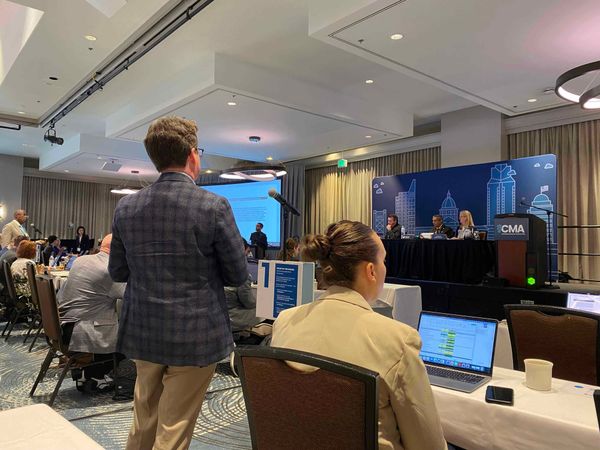
I have to make an argument, hear a counterargument, lose a vote, and then sit next to the person who beat me at dinner. And then come back the next morning and do it again.

Hows & Whys
“Peptide therapy” sounds scientific enough to borrow the prestige of translational medicine and vague enough to hold almost any hope someone wants to pour into it. And that is part of the appeal.

Communication Skills
Here's what I think is happening—quietly, unevenly, and faster than our field is tracking: the foundational architecture of serious illness communication is being restructured by a force we didn't design, don't control, and in many cases don't even know is in the room.

Hows & Whys
Kratom becomes clinically relevant because millions of people live in a health system where pain care is uneven and access to thoughtful longitudinal symptom care is thin.

Health Policy
The AI infrastructure that will drive the next decade of cancer care doesn't have a signal for the work specialty palliative care does. As the AI hardens, the field gets quieter — not because anyone decided to silence us, but because the algorithm has no pattern for the patient who needs us.

Hows & Whys
Walk into the website of any cancer center built or rebranded in the last five years and you will find palliative care's vocabulary doing work it didn't sign up for. Symptom management. Whole-person care. Goals of care. Supportive care. The words are everywhere. The specialty is harder to find.

Health Policy
The biggest cancer centers don't get to be biggest because they decided to be. They are accredited. Each of their accreditation regimes carries floor requirements. Some of those floors are clinical. Some of those floors include specialty palliative care.

Changing the World
What if the reason ACP underdelivers isn't that we do too little of it, but that we've misunderstood what it's for? The answer lives in an unlikely place for a clinical field: behavioral economics.

Communication Skills
Honesty and hope aren’t opposing forces. They are a matched set: hope for the best and prepare for the worst—paired with an explicit promise of nonabandonment.

Hows & Whys
The de-skilling threat is real and asymmetric across specialties. Palliative care sits on the protected side of that asymmetry—because the highest-value things we do are the things machines are worst at.
Hospice
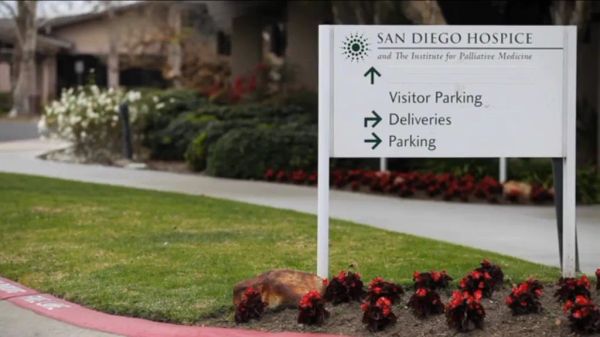
This is what happened at San Diego Hospice between November 2012 and February 2013. Leadership made a series of irreversible operational decisions — public disclosure, inpatient closure, live discharges, admission restrictions — while sailing entirely on estimated position.